
In this corner, we have rats, mice and squirrels! Weighing in at a whopping 30 grams, this wrecking crew can cause an immense amount of damage before you even know they're there. They fight dirty, they work the night shift, and they never, ever stop chewing.
In the other corner, we have homeowners and th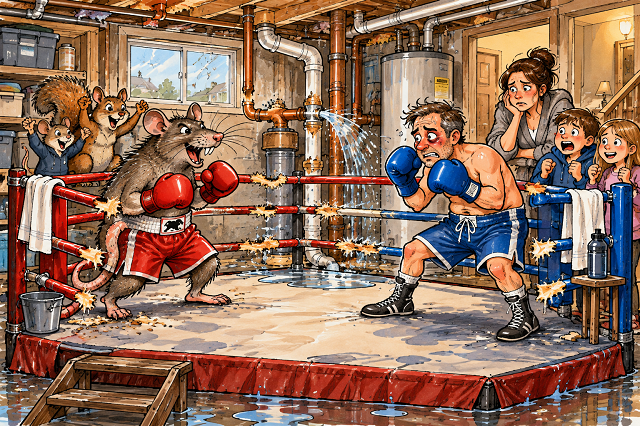 eir pipes! Weighing in at one mortgage, a few hundred feet of plumbing and absolutely no idea a fight has started.
The bell rings.
Round one: the challengers slip through a gap the size of a pencil and the homeowner never sees it coming.
Round two: a body blow to the supply line, delivered quietly behind the wall.
Round three: the pipe takes one chomp too many, and down goes the ceiling. The crowd gasps. The insurance adjuster raises an eyebrow. The homeowner is on the ropes, staring at a very wet drywall. But here's the thing: this fight isn't over, and you're not a lightweight. With the right game plan, you can land the first punch.

Rodent-related water Damage is one of the most preventable losses we see, and it peaks right about now. Here is why fall is the danger zone, what rodents actually damage, how insurance tends to treat it, and what you can do before the cold sets in.
Why is FALL peak rodent season?
When nights cool off, mice and rats look for three things: warmth, food and a safe place to nest. Your home offers all three. Outdoor food sources dry up as the season winds down, and a wall cavity, crawlspace or attic starts to look very appealing.
A few things make this time of year especially costly:
- Small entry points are enough. A mouse can squeeze through a gap about the width of a pencil, and a rat through an opening around the size of a quarter.
- Rodents have to gnaw. Their front teeth never stop growing, so they chew constantly to wear them down. Plastic and rubber water lines, washing machine hoses and drain lines are all fair game.
- The damage hides. Pipes run through the exact spaces rodents like best: behind walls, under sinks, in crawlspaces and above ceilings. A small chew mark can sit there for weeks.
- Cold weather puts stress on weakened lines. A nibbled pipe that holds for a while may fail when pressure changes or the heat comes on.
- Empty buildings are easy targets. Seasonal homes, cabins, rentals and vacation properties can go weeks without anyone noticing a problem.
Did this summer's wildfires make it worse?
Possibly, but it's a likely contributor rather than a proven cause. Pest control companies and wildlife observers in other fire-affected regions report that habitat loss pushes displaced rodents toward nearby homes and neighbourhoods in search of food, water and shelter, and public health agencies have issued post-fire rodent guidance for that reason. There is also the loss of natural predators to consider, since fire can thin out the animals that normally keep rodent numbers in check.
What we can't point to is hard local data tying this fall's calls directly to this summer's fires. Fire is one factor stacked on top of an already busy season, and the practical advice is the same either way: assume rodent pressure is higher than usual and check your home now.
The damage rodents actually cause
Water is what turns a rodent problem into a restoration problem, but it's far from the only damage.
- Pipes and plumbing. Chewed supply lines, PEX and plastic tubing, drain lines, washing machine and dishwasher hoses, and ice maker lines can leak slowly or fail all at once. A single failed line can release a lot of water into walls, floors and ceilings before anyone notices.
- Insulation. Rodents tunnel through it and nest in it, and contaminate it with droppings and urine. Contaminated insulation often has to be removed and replaced rather than cleaned.
- Electrical wiring. Chewed wiring is a fire risk and a common cause of mysterious electrical problems.
- Droppings, urine and odour. These spread through wall cavities, attics and crawlspaces and can leave lingering smells. Deer mice in particular can carry hantavirus, so cleanup needs care.
- Structural and finish damage. Gnawed framing, drywall, ducting and stored belongings add up, especially when moisture follows.
What it means for your insurance
This is where many homeowners get a surprise. Most Canadian home insurance policies exclude damage caused by rodents and other vermin, and they don't pay for pest control. Insurers also look hard at whether damage was gradual and preventable, such as an ongoing infestation, or sudden and unexpected. They will likely see it as a maintenance issue, and that will may void coverage.
The water that follows can be a different story. Some policies cover the resulting escape of water even when the cause was an animal, while others deny the claim. It depends on your policy wording and on what the adjuster finds.
What that means in practice:
- Don't assume you're covered or that you're not. Read your policy and ask your broker how it treats vermin-caused water damage.
- Early action helps. An infestation that was ignored for months is harder to argue as sudden and accidental.
- Document everything. Take photos and video of damage, droppings and entry points, and keep receipts for any pest control or repairs.
- A claim has costs. Deductibles and possible premium impacts can outweigh a small repair, so it's worth weighing before you file.
We can help document and mitigate the damage, but your insurer decides what's covered.
How to prevent it
Prevention comes down to blocking entry, removing the reasons to come in, and checking the places you can't normally see.
- Seal entry points. Walk the outside of your home and look for gaps around pipes, vents, cables, the foundation, garage doors and rooflines. Use steel wool, metal flashing or hardware cloth and sealant. Mice chew through foam and plastic alone.
- Fix the openings inside, too. Check where plumbing and wiring pass through walls and floors under sinks, behind appliances and in utility rooms.
- Remove food and water. Store food, pet food and birdseed in sealed containers, keep garbage in lidded bins, clear fallen fruit and fix drips.
- Reduce cover near the house. Keep firewood off the ground and away from walls, trim back shrubs, and clear clutter from garages, sheds and crawlspaces.
- Inspect hidden areas. Check under sinks, behind the washer and fridge, in the attic and in the crawlspace for droppings, gnaw marks, nesting material and grease smears.
- Use traps carefully. Snap traps are generally preferred over poison, which can leave rodents dying inside walls. Check traps daily.
- Call a pest professional early. If you see signs of activity, a professional can find entry points you've missed.
- Know where your water shut-off is. If a line does fail, shutting the water off fast limits the damage.
Signs of activity and what to do if you find damage
Watch for scratching or scurrying in walls and ceilings at night, droppings along baseboards or in cupboards, shredded paper or insulation, gnawed packaging, and musty or ammonia-like smells. A sudden drop in water pressure, damp spots, stained ceilings or a running sound where there shouldn't be one can point to a damaged line.
If you find droppings or nests, don't sweep or vacuum them dry, which sends particles into the air. Wear gloves and a mask, dampen the area with a disinfectant solution, wipe it up, and wash your hands well afterward.
If you find a leak or water damage, shut off the water, take photos, and call us. Water that sits in walls and insulation leads to mould within a short time, so quick drying matters. Our team can assess the damage, dry the structure, and remove contaminated materials.
Seasonal and vacation properties: if you're leaving a home or cabin empty this winter, check for entry points first, have someone look in on it regularly, and consider shutting off the main water.
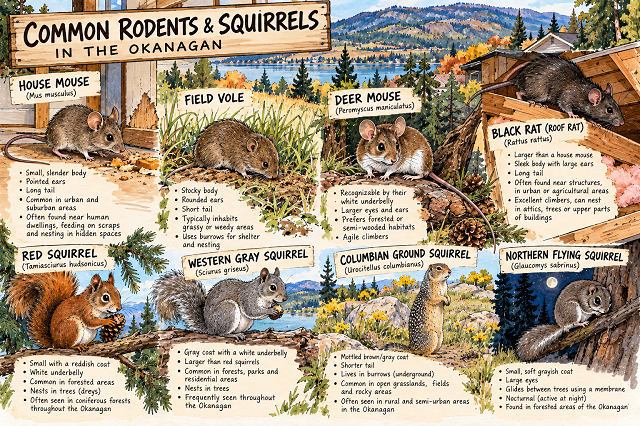
These are the types of rodents you may see in the Okanagan:
Seeing signs of rodents or water damage? Contact Total Restoration Services and we'll help you sort out next steps.